Marching Orders 2016: Pick a Good-Enough Dev Framework
Editor's Note: Throughout the month of January, we'll be running installments of Marching Orders, our annual collection of advice and predictions from channel luminaries about what to do and what to expect in the year ahead. For this entry, we invited Michael Desmond, editor in chief of MSDN Magazine, to provide insight on what to watch for in development this year.
Keeping tabs on JavaScript frameworks is like keeping track of your teenage daughter's musical tastes. Every other week there seems to be a new framework that is, like, the best...ever.
JQuery, Dojo, Angular, Backbone, Knockout, Ember, React -- the list of frameworks literally goes on and on. Which is great if you are a Web developer looking for just the right resource to streamline your code effort and provide nifty capabilities like two-way data binding, dependency injection and sleek UIs. It may not be so good, though, when you have to actually manage and maintain code.
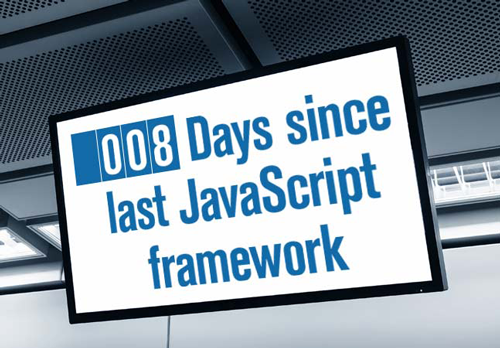
In fact, many developers worry that framework proliferation may balkanize Web development, fracturing the market of skilled Web developers and creating islands of not-so-compatible JavaScript code that must be ported to work with other frameworks. Developers also face frustration as frameworks emerge and advance. Do you stay with the framework you know, or invest time and effort to master a new framework that promises slick new features?
The frantic pace can't go on forever (can it?), but it will continue at least for the short term. For developers, don't fall victim to paralysis by analysis. Find a framework that addresses your needs and verify that it's being actively developed and enjoys a sizable following. That will help future-proof your framework-dependent code.
Also consider open source frameworks, which can be freely tailored to suit a specific need.
More Marching Orders 2016:
Posted by Michael Desmond on January 08, 2016