News
Microsoft Releases Windows Azure SQL Database Premium Preview
- By Kurt Mackie
- July 23, 2013
Microsoft launched the preview version of its Windows Azure SQL Database Premium service on Tuesday, in addition to releasing the July Windows Azure update.
Microsoft first announced the Windows Azure SQL Database Premium offering earlier this month at its Worldwide Partner Conference. The preview release is available for testing via sign-up here.
Users of the Premium preview must be Windows Azure SQL Database customers with account administrator rights, according to Microsoft's announcement. The Premium service is designed for organizations that need a reserved database capacity due to high peak loads, concurrent requests or the need to ensure guaranteed application response times.
Testing the Premium preview offering isn't free. There are two plans, costing $15 per day (one core, 8 GB RAM) or $30 per day (two cores, 16 GB RAM) for the preview. Those prices will rise to $30 per day and $60 per day, respectively, when Microsoft releases the final product.
July Windows Azure Update
The new Windows Azure improvements include added management capabilities and a new database export feature. Those features are included as part of Microsoft's July Windows Azure update release, which is now available through a Windows Azure account or a free trial.
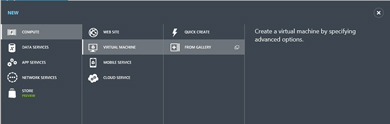
The Windows Azure Management Portal has been enhanced with more options for managing virtual machines (VMs). The gallery feature, which allows users to select from a collection of VM templates maintained by Microsoft and other software vendors, now has an option to "expose the underlying cloud service," used to host the VMs. Microsoft added an option in the management portal to create and maintain virtual network subnets as well. Remote PowerShell is now enabled by default in the management portal, according to Microsoft.
 [Click on image for larger view.]
Managing virtual machines in the Windows Azure Management Portal. (Source: Microsoft)
[Click on image for larger view.]
Managing virtual machines in the Windows Azure Management Portal. (Source: Microsoft)
In addition, a new Windows Azure Traffic Manager service has been integrated into the Windows Azure Management Portal. Microsoft describes the Traffic Manager service as providing a means for grouping cloud deployments and centralizing traffic load rules. It's possible to use the Traffic Manager to optimize cloud services so that they connect with the lowest responses times per region. It can also be used to set priorities for cloud failovers by region.
Microsoft added the ability to set recurring automated SQL Database exports to a storage account with this release of Windows Azure. Users can set an export rule on any SQL Database to create a .BACPAC file at frequencies ranging from daily to longer intervals. The export status will show up in the "Dashboard" tab view of the SQL Database.
SQL Database exports can take "several hours," depending on size, Microsoft advises. Moreover, this feature can rack up the costs because the databases get copied first before export, and users get charged for the number of databases per day. There's also a network bandwidth charge for exporting a database outside a region.
More details about the July Windows Azure improvements can be found in Microsoft's announcement.
About the Author
Kurt Mackie is senior news producer for 1105 Media's Converge360 group.